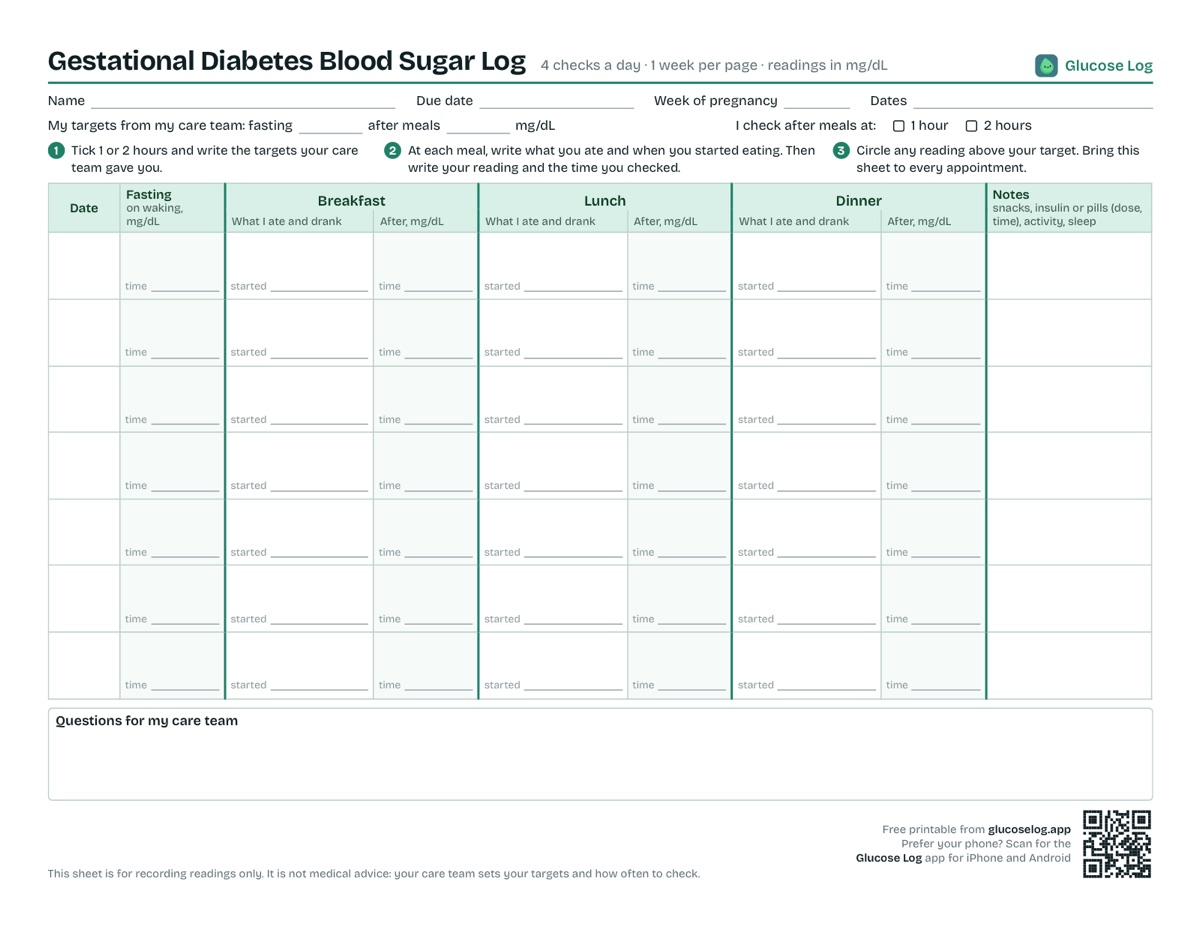
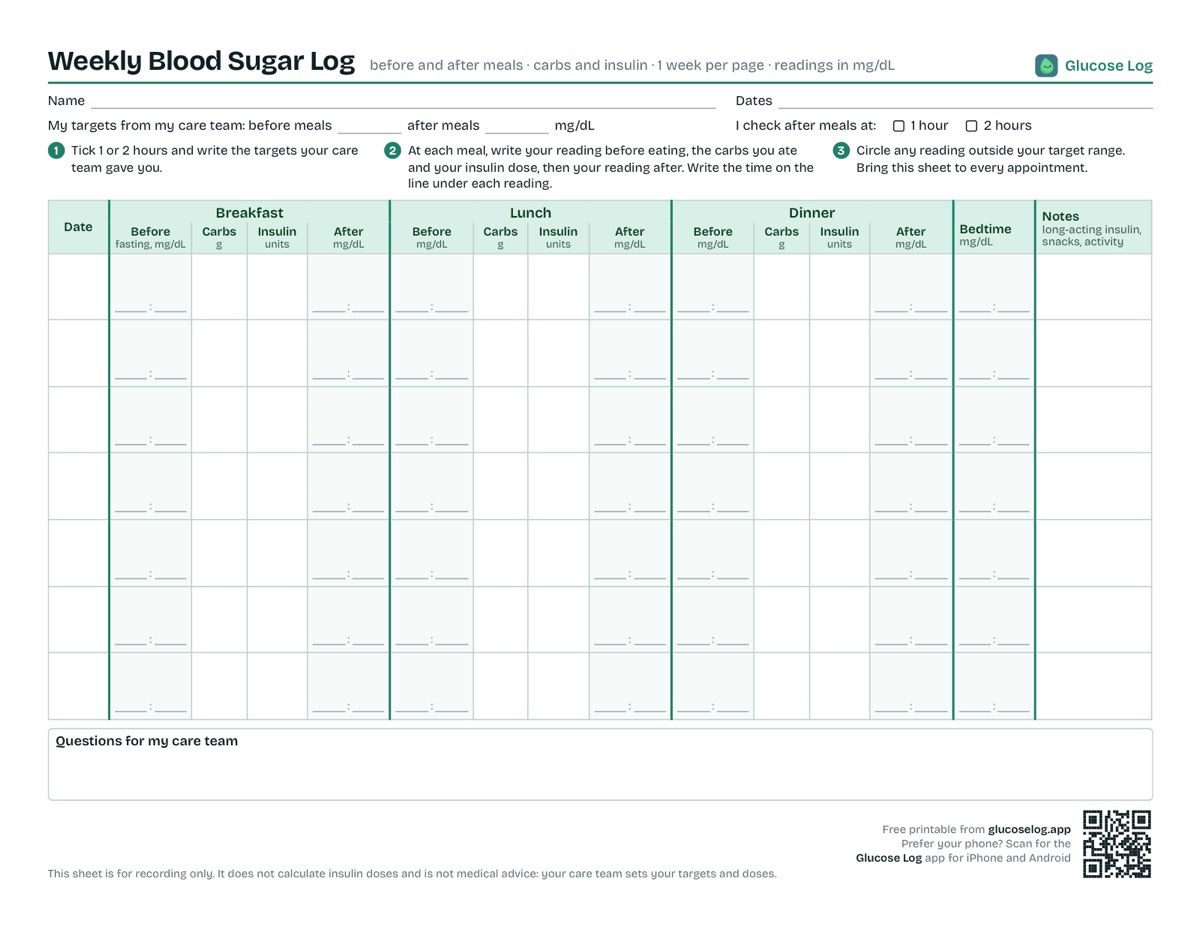
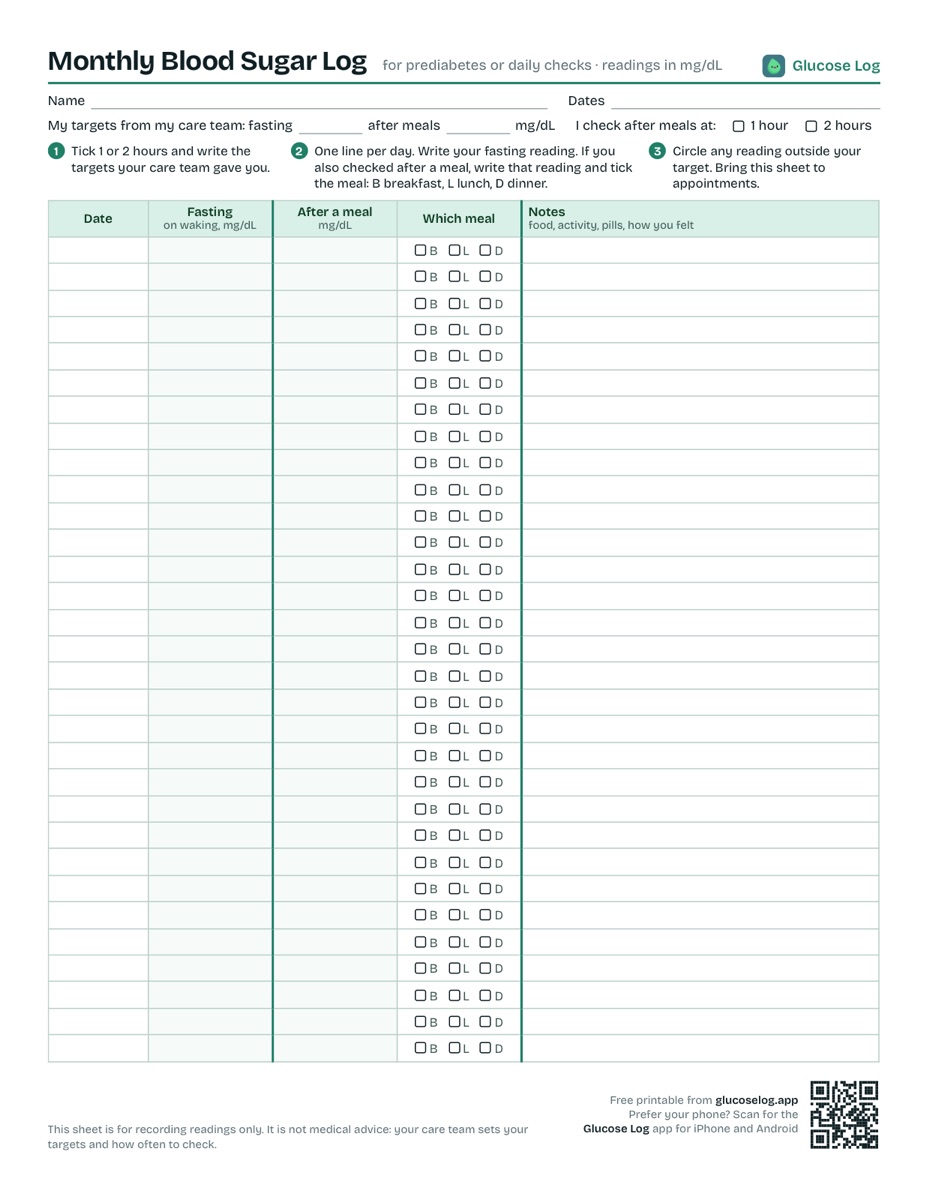
Which log should I use?
- Gestational diabetes: the gestational log. It follows the usual schedule of a fasting check plus a check after each main meal.
- Several checks a day or insulin with meals: the weekly log, with columns for carbs and insulin doses.
- Prediabetes or one or two checks a day: the monthly log.
If your care team gave you a different schedule, follow it. Any of the logs has room in the notes for extra checks.
How to fill in a blood sugar log
- Write your targets at the top. Ask your care team for your target ranges and when to check after meals (1 or 2 hours).
- Write each reading right after you check. Copy the number from your meter or sensor app, with the time. Waiting until evening is how readings get lost.
- Note the context. Fasting, before a meal, after a meal or bedtime. A number without context is hard to read later.
- Add short notes. What you ate, insulin or pills, activity, poor sleep or illness. Two or three words are enough.
- Circle readings outside your target. Over a week or two, patterns show up, for example high readings after the same meal.
What to bring to your doctor
- Your filled-in logs for the last 2 to 4 weeks, or the period your care team asked for.
- Your meter, if your clinic wants to compare it with your log.
- Readings you circled and what was going on around them: a meal, a missed dose, stress, illness.
- Your questions. The gestational and weekly logs have a box for them at the bottom.
Your care team will look at your averages, how often you are in your target range and when readings run high or low. On paper you work these out by hand or leave them to the clinic.
Paper log or app?
Paper works well, and many people prefer it. Here is an honest comparison with Glucose Log, the app I make.
Glucose Log is a simple blood sugar diary for type 1, type 2, gestational diabetes and prediabetes. No account and no ads; your readings stay on your device.
Questions
Can I get a free diabetic logbook?
Yes. The logs on this page are free to download and print, with no sign-up. Some meter brands, pharmacies and clinics also hand out free paper logbooks, so it is worth asking.
How often should I check my blood sugar?
As often as your care team advises. It depends on your type of diabetes and your treatment: some people check several times a day, others a few times a week. With gestational diabetes, a common schedule is fasting plus after each meal, but your care team sets yours.
Should I use mg/dL or mmol/L?
Use the units your meter shows. The US uses mg/dL; the UK, Canada, Australia and many other countries use mmol/L. To convert, 1 mmol/L is about 18 mg/dL.
Can a phone app measure blood sugar?
No. A phone or an app on its own cannot measure blood glucose. You need a finger-prick meter or a continuous glucose monitor (CGM). Apps like Glucose Log only record the readings you take. More on why a phone can't measure blood sugar.
These logs are for recording readings only. They are not medical advice. Your care team sets your targets, how often to check and any medication doses.